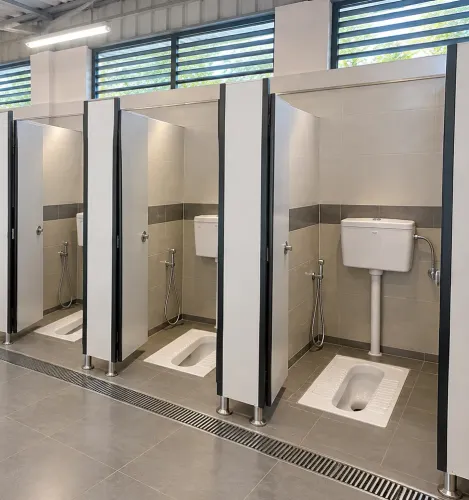
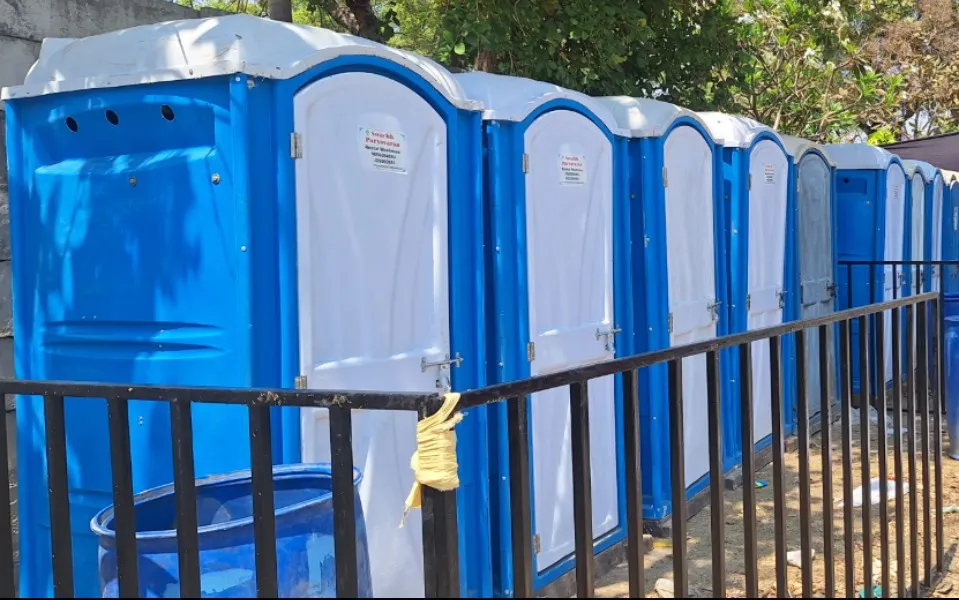
Managing toilets across a large site can become difficult when maintenance teams rely only on fixed cleaning schedules. A Connected Toilet approach introduces monitoring and data-driven management possibilities that can help organisations understand how sanitation facilities are being used.
The exact capabilities depend on the technology and system selected. Connected sanitation systems may incorporate sensors or monitoring components designed to provide information related to usage, servicing requirements, consumable levels, environmental conditions, or other operational parameters.
This approach can be relevant for high-footfall facilities in Nagpur such as large commercial premises, institutions, transport environments, industrial campuses, public facilities, and major event locations.
Traditional cleaning schedules usually work on predetermined intervals. The challenge is that toilet usage rarely remains constant throughout the day. One washroom may experience intense traffic while another remains comparatively quiet.
Usage information can help facility managers allocate cleaning resources more logically. Instead of treating every location identically, maintenance activity can be prioritised according to actual conditions where the installed system supports such monitoring.
Potential operational benefits can include:
- Better visibility into facility usage
- More informed cleaning schedules
- Faster identification of certain servicing requirements
- Improved consumable management
- Better allocation of maintenance staff
- Useful operational data for facility planning
Technology, however, does not replace sanitation staff. Sensors cannot clean surfaces, repair damaged plumbing, empty waste tanks, or correct inadequate drainage. Connected systems should therefore be viewed as management tools supporting a well-designed maintenance programme.
Before adopting such a system, organisations should identify the problem they actually want to solve. Installing technology without a clear operational objective can add complexity without providing meaningful value.
Questions worth asking include whether the facility needs usage monitoring, maintenance alerts, consumable tracking, centralised visibility, or a combination of functions.
Infrastructure also matters. Depending on the selected solution, connectivity, power, equipment protection, system compatibility, and maintenance capability may need to be assessed.
For organisations considering modern sanitation infrastructure in Maharashtra, Swachh Paryavaran can evaluate toilet requirements alongside practical site considerations. In Nagpur, connected solutions may be particularly relevant where multiple washrooms or high user volumes make manual monitoring inefficient.
Smart sanitation should ultimately make facility management simpler rather than more complicated. The most useful connected toilet system is therefore one that addresses a genuine operational challenge, provides actionable information, and integrates with the organisation's existing cleaning and maintenance practices.
Keywords