Regular Safety Tank Cleaning, commonly searched for when users mean septic tank cleaning, is an important part of sanitation management wherever wastewater is collected in an onsite tank rather than discharged directly into a municipal sewer network.
Problems often arise because tank maintenance is postponed until toilets start draining slowly, unpleasant odours appear, or wastewater begins backing up. At that point, what could have been planned maintenance may become an urgent sanitation problem.
One common mistake is assuming that a septic tank needs attention only when it appears completely full. Solids accumulate over time, and the required cleaning interval varies according to tank capacity, wastewater volume, number of users, and operating conditions.
Another mistake is ignoring early warning signs.
Facility managers in Nagpur should pay attention to symptoms such as:
- Persistent unpleasant odours
- Unusually slow toilet drainage
- Wastewater backing up
- Overflow around the tank area
- Repeated drainage problems
- Unexplained wet areas near the system
These signs can have several causes, so the actual problem should be assessed rather than assuming that cleaning alone will resolve every drainage issue.
Unsafe entry is a particularly serious concern. Septic tanks and similar confined spaces can contain hazardous gases and oxygen-deficient atmospheres. Cleaning therefore requires appropriate procedures, equipment, and trained personnel. A tank should never be treated like an ordinary storage container.
Another frequent problem is poor access planning. If vehicles or equipment cannot reach the tank appropriately, servicing becomes more difficult. New facilities should consider future maintenance access while the sanitation system is being designed.
Waste handling after removal also matters. Tank contents require appropriate collection, transportation, and disposal practices in line with applicable local requirements. Moving waste out of the tank is only one part of responsible sanitation management.
In Maharashtra's growing urban and peri-urban areas, properties outside direct sewer coverage may depend heavily on onsite wastewater arrangements. Commercial sites with substantial daily usage should therefore keep maintenance records and review tank performance periodically.
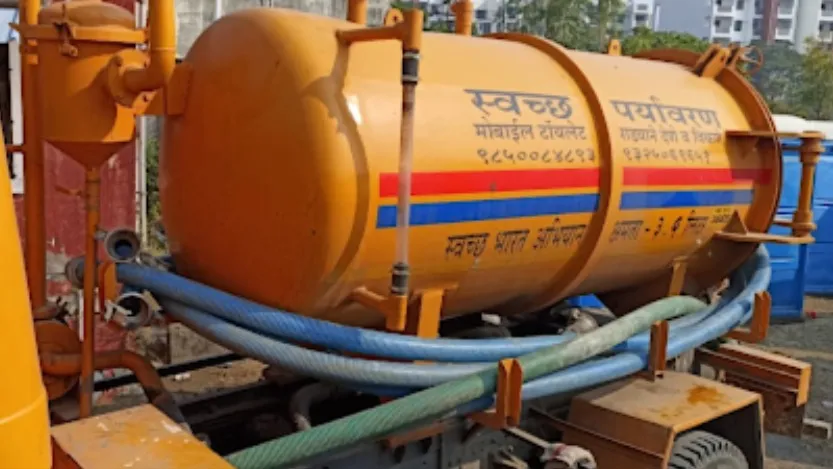
Swachh Paryavaran supports sanitation requirements in Nagpur where planned tank cleaning and waste-management arrangements are needed. The appropriate servicing approach should reflect tank design, condition, capacity, access, and usage.
Preventive attention is usually more manageable than responding after a sanitation system has already overflowed. Recognising warning signs, keeping access clear, using suitable equipment, and planning maintenance according to actual usage can help facilities manage onsite wastewater systems more reliably.
Keywords